The peptide prediction ecosystem is exploding 🤯🧬
peptides, machine learning, deep learning, bioinformatics, AMP, reproducibility, prediction tools
📌 Project highlights
- 🧬 Reviews 140 peptide prediction tools
- 🤖 Covers AMP, anticancer, antiviral & more
- 📊 Tracks rise of deep learning in peptide ML
- ⚠️ Reveals major reproducibility crisis
- 🌐 Provides curated peptide prediction resource database
🎉 New paper out! This one tackles a very meta problem:
👉 there are now SO MANY peptide predictors that choosing one became a challenge itself 😄
👉 The dynamic landscape of peptide activity prediction
🔗 Explore the peptide prediction landscape
👉 one place to browse the chaotic peptide prediction universe 🌌
🎧 Audio summary
Antimicrobial predictors. Anticancer predictors. Antiviral predictors.
Deep learning everywhere. Broken web servers. Missing code 😅
👉 Here’s a short audio overview 🎧 explaining what is happening in peptide ML:
🔬 What is this about?
Peptides can do a lot:
- 🦠 antimicrobial activity
- 🎯 anticancer effects
- 🧠 blood–brain barrier penetration
- 🔥 anti-inflammatory activity
- 🧬 anti-amyloid interactions
Because of that:
👉 researchers keep building ML predictors for peptide activity.
And the field exploded 🚀
📊 The scale of the problem
This review identified:
- 140 peptide prediction tools
- published between 2009–2022
Activities included:
- antimicrobial peptides (AMPs)
- anticancer peptides
- antiviral peptides
- antifungal peptides
- cell-penetrating peptides
- blood–brain barrier peptides
…and many more 😅
⚠️ The core problem
Too many tools.
Too many datasets.
Too many inconsistent definitions.
Example:
👉 “AMP” sometimes means:
- antibacterial only ❌
- all antimicrobial peptides ✅
depending on the paper
And this creates:
- benchmark bias
- incompatible predictors
- reproducibility nightmares
🧠 What they analyzed
📊 Trends in peptide ML
The study explored:
- predictive activities
- ML architectures
- citations
- reproducibility
- web server availability
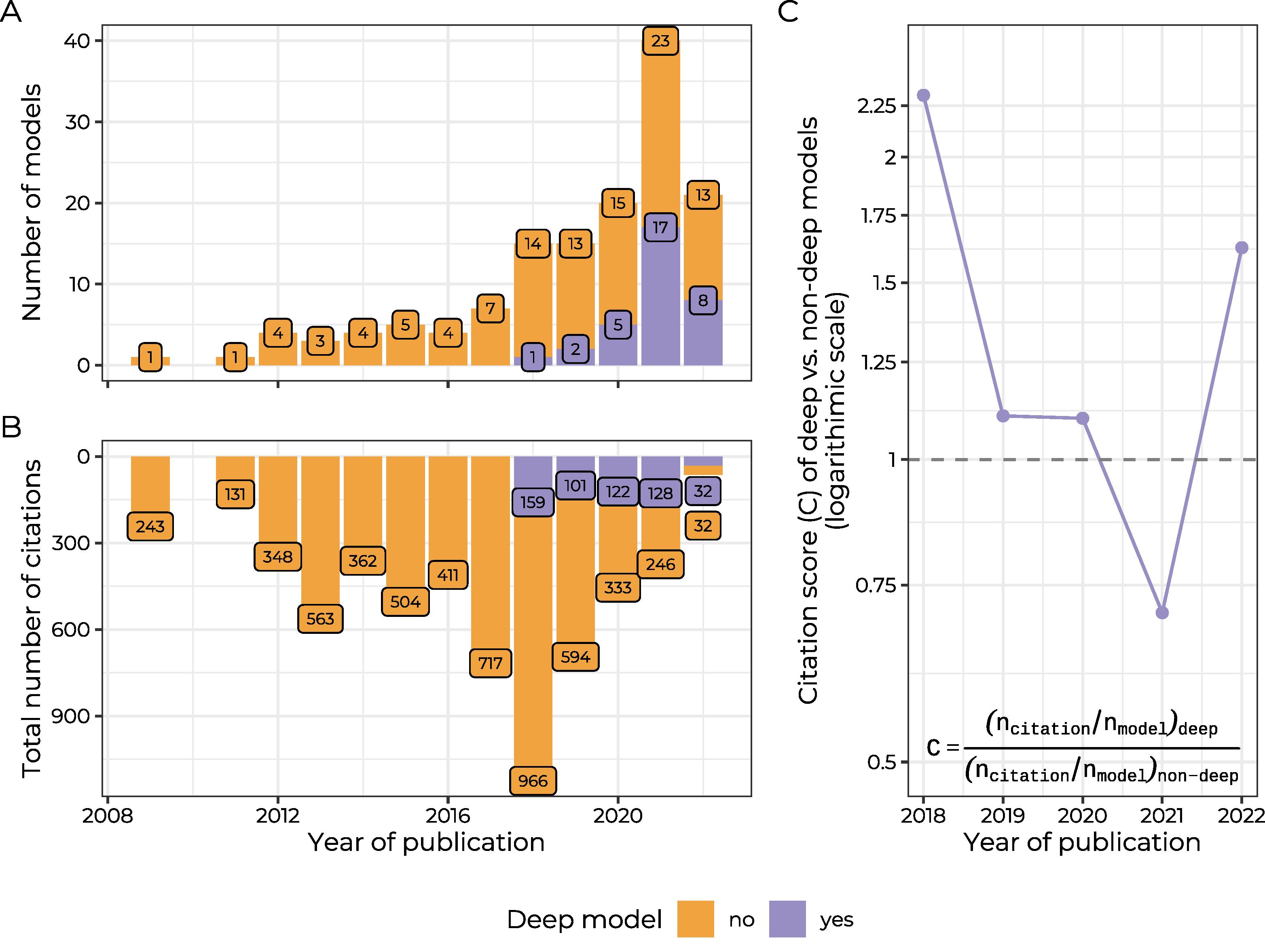
🤖 Deep learning explosion
Before 2018:
👉 basically no deep models.
By 2021:
👉 almost HALF of predictors used deep learning
🧬 Most common activities
Top prediction targets were:
- anticancer peptides
- antimicrobial peptides
- antiviral peptides
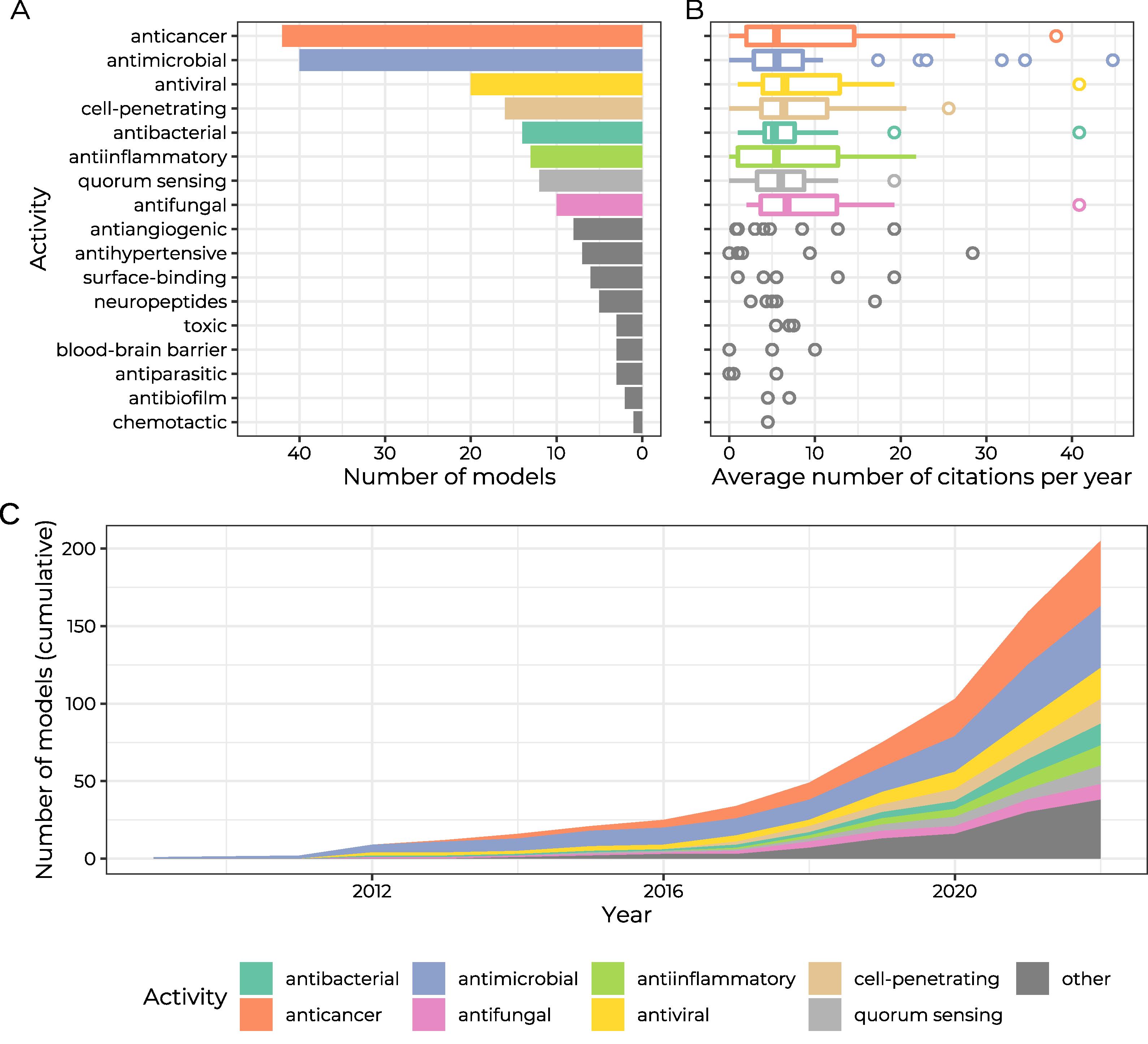
👉 AMP and anticancer prediction dominate the field.
⚙️ Most common ML models
The kings of peptide ML:
- 🌲 Random Forests
- 📈 Support Vector Machines
- 🤖 Deep Learning architectures
Interestingly:
👉 deep learning is popular…
BUT not always clearly better.
🔍 Key insights
⚠️ Reproducibility crisis 🚨
This was probably the biggest finding.
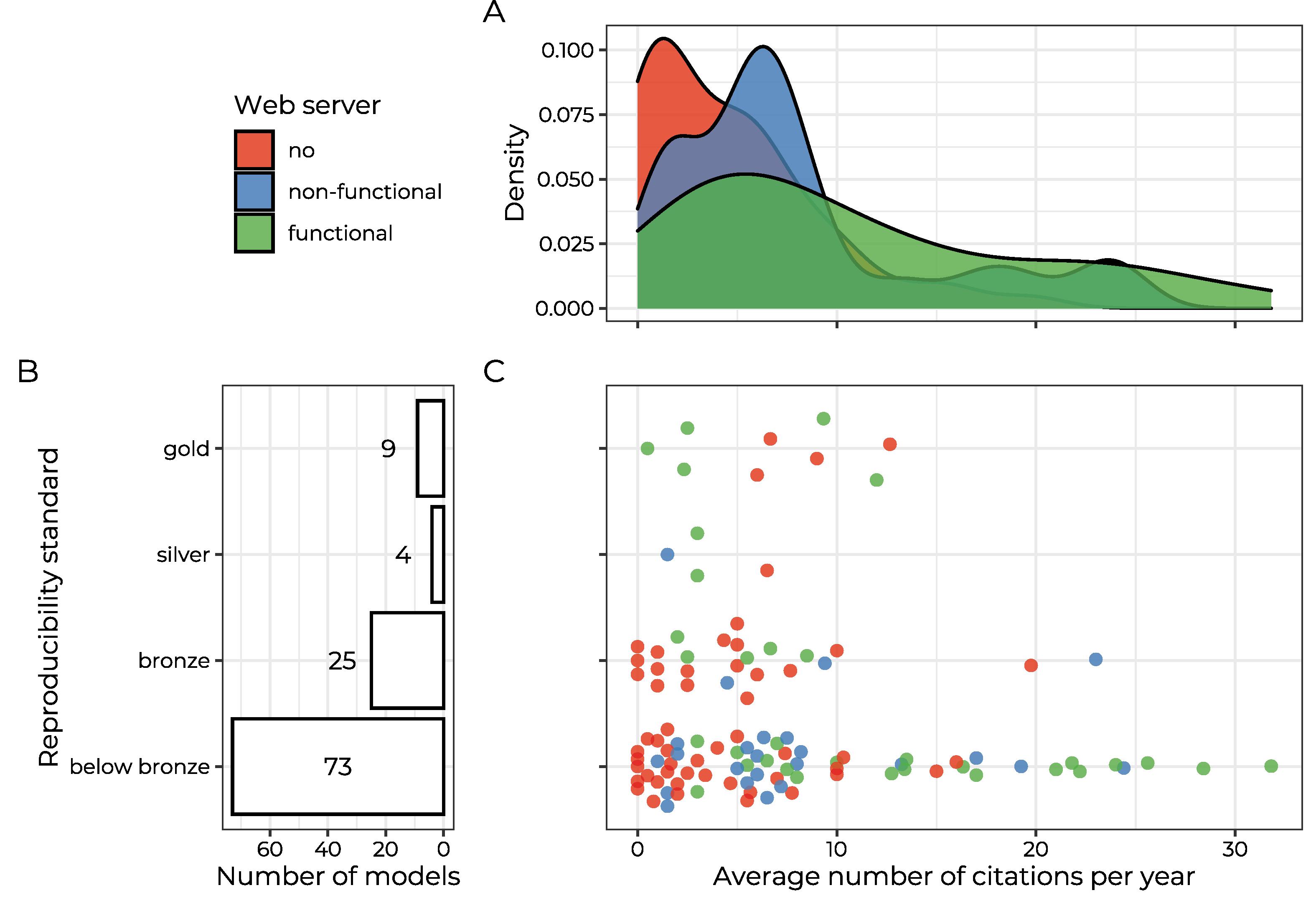
Among 111 analyzed tools:
- only 38 met minimum reproducibility requirements
- only 9 achieved “gold standard” reproducibility
Meaning:
❌ missing code
❌ missing datasets
❌ broken workflows
👉 and yes…
many web servers were dead 😅
🌐 Web servers matter more than reproducibility
Surprisingly:
👉 tools with active web servers got more citations
even if they were less reproducible
This creates a weird incentive:
👉 flashy website > robust science
🤖 Deep learning hype is real
Deep models became more cited over time.
BUT:
the review highlights that for AMP prediction:
👉 DL often does not outperform shallow models
🚀 Why this matters
🧠 For peptide therapeutics
Peptide ML is now central for:
- antimicrobial discovery
- anticancer peptides
- neurodegeneration research
⚠️ For bioinformatics
The field needs:
- better standards
- fair benchmarking
- reproducibility
- maintenance of tools
🌍 For users
This review acts as:
👉 a navigation map for peptide prediction tools.
💚 BioGenies perspective
This paper is basically:
👉 “someone had to say it” 😄
The peptide ML ecosystem is:
- powerful
- exciting
- rapidly growing
BUT ALSO:
- fragmented
- biased
- difficult to reproduce